< 01 > ARTICLES / PORTFOLIO

How to build your first product design portfolio
By Vini Asevedo · 4 min read
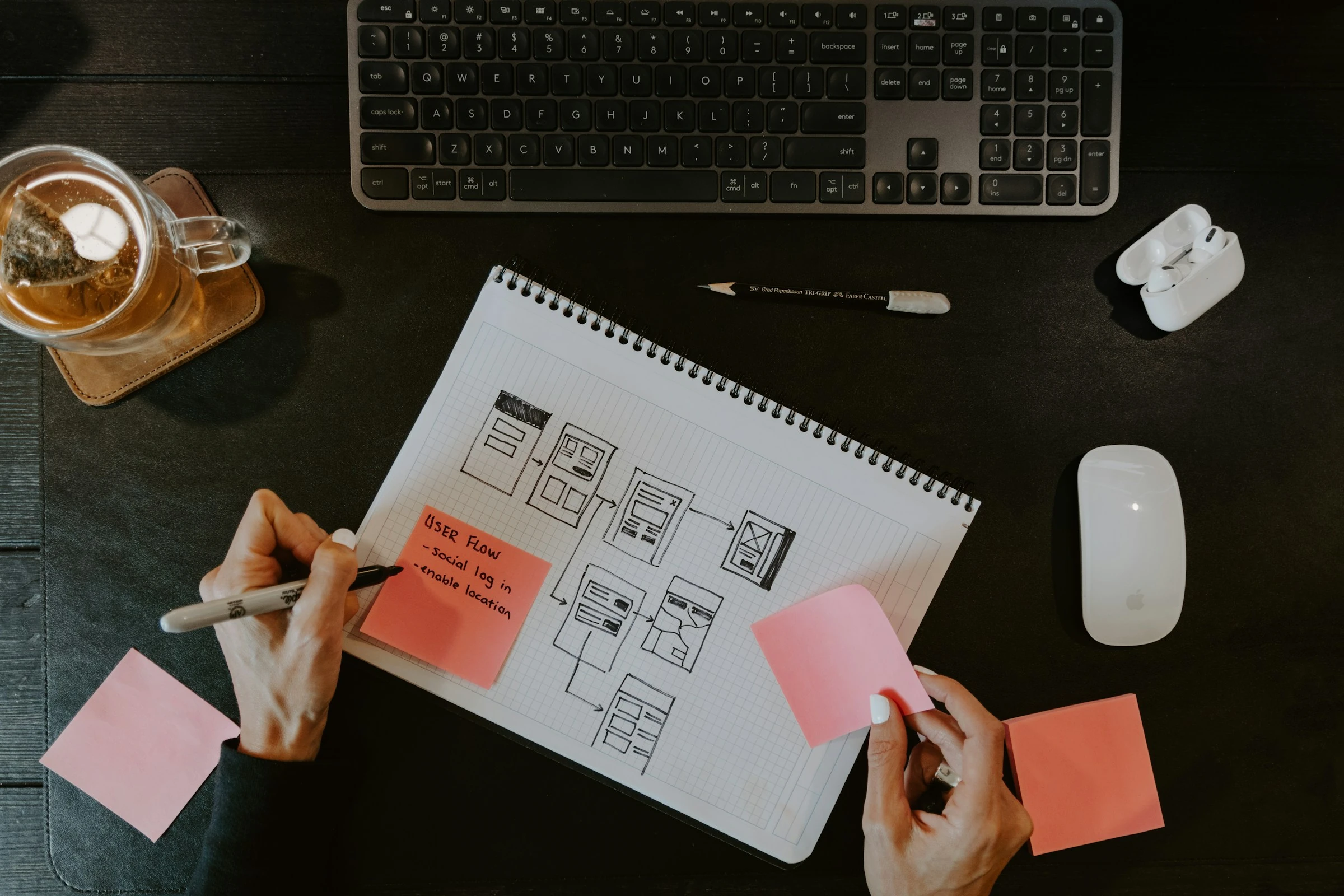
Learning how to build your first product design portfolio starts with choosing what you want to show about your work. Even without professional experience, you can demonstrate how you investigate problems, make decisions and learn from the solutions you build.
While developing my own portfolio, I had to revise the writing, reorganize results and find visual ways to explain very different projects. Here are a few choices that can help you get started.
< 01 >
Choose a project you can explain
To create your first design portfolio, think about the kind of work you want to do. Choose a project that demonstrates relevant skills.
It could be an academic project, a hackathon or a personal initiative. If you’re building a UX portfolio without professional experience, investigate a difficulty you can observe: finding information, completing registration or organizing a task.
State the context. Readers need to understand what was an exercise, what was tested and what people actually used.
< 02 >
Write the case before designing the page
A product design case study can start with five questions:
- What problem did you try to solve, and for whom?
- What was your contribution?
- What did you learn that changed the direction of the work?
- What decisions did you make, and why?
- O que aconteceu depois — e o que ainda falta descobrir?
Use these answers to choose your portfolio material. An interview deserves space when it helps explain a decision. A flow belongs in the case when it clarifies how the experience changed.
< 03 >
Give results context
In my Smarters Design System case, I show average execution time falling from 7.4 to 5.2 hours: approximately 30%, based on averages recorded in Monday. The number becomes meaningful because its measure and source are included.
For your first product design portfolio, you may not yet have metrics from a live product. You can show difficulties observed in testing, changes made to the prototype and questions that remain open.
Identify participants and evaluation conditions. Separate observed results, projections and future targets.
< 04 >
Make the layout help people understand
Open each portfolio case with the problem, your role, the period, the team and the main result or learning.
Then give the story room to breathe. Use legible images, captions that explain what to notice and numbered annotations connecting interface details to your reasoning.
In my portfolio, I use mockups to contextualize screens, charts for comparisons and diagrams for journeys. Every visual should make the story easier to read.
For long projects, an index helps readers find topics. Supporting details can sit in expandable sections while the central decisions remain visible.
< 05 >
Build a viable first version
To build your UX or product design portfolio, choose a format you can publish and maintain. A presentation, an existing platform or your own website can all be starting points.
Create a consistent foundation of typography, colors, spacing and components. Check it on a phone: text, images and navigation should still make sense.
AI can help organize content and build the page. Check the facts and keep your own way of explaining decisions.
< 06 >
Test it with someone before publishing
Ask someone to go through your first portfolio and explain what they understood: the problem, what you did and what changed.
Notice where they hesitate, skip content or need an explanation. Their responses can help you simplify and reorganize the presentation.
Now that you have a path for building your first product design portfolio, choose a project and write your five answers. Turn that material into a version people can read, test and that you can publish. Your portfolio will gain depth as you do, observe and learn more.
Explore my projects